A steroid-free, TGA-listed cream you can use every day, on any area.
You gave up the hot showers first.
Then wool, then the "harsh" laundry powder, then dairy just in case. You swapped every soap for a gentle one and every lotion for a thicker one, and you built a shelf of it: the ceramide cream, the colloidal oatmeal tub, the prescription steroid you use when it gets bad and stop when the skin thins or the label warns you off your face. You moisturise religiously, morning and night, the way you were told to.
“
You do everything you were told to do. And your skin still flares.
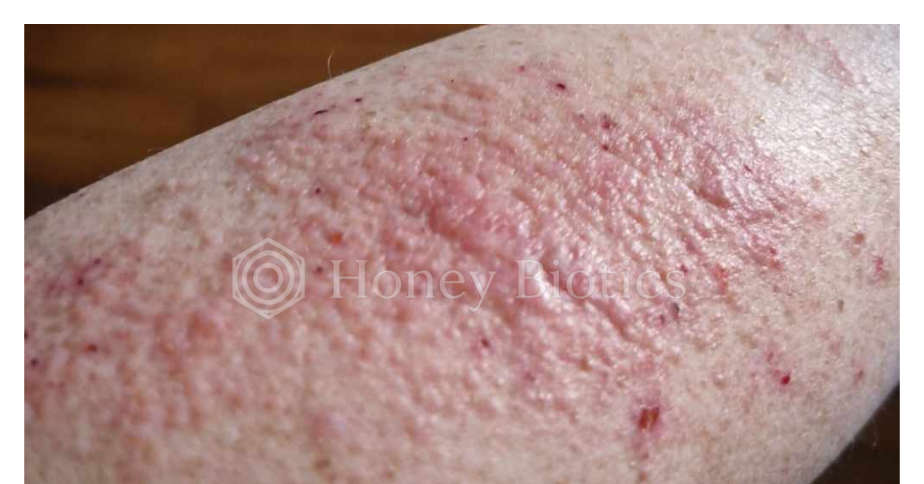
Not every day, maybe, but enough. The patch inside your elbow that comes back the moment you relax. The redness that flushes up on your cheeks or eyelids for no reason. The nights you wake up itching, and the mornings your skin is raw before you have touched it. You have started to wonder if this is just your skin now, if some people just have "bad skin," and you are one of them.
The flare that keeps coming back, no matter what you put on it.
I have spent years writing about skin conditions and reading the research on why some people's eczema calms with a good moisturiser, and why others follow the exact same routine and stay stuck. And here is what I can tell you:
If you are doing everything right and your skin still will not settle, the problem is not your discipline. It is that almost nothing you are putting on is reaching the thing that actually keeps the flare going.
The Part of Eczema Nobody Explains
Almost every explanation stops at one idea: your skin is dry, so lock in more moisture. That is not wrong, but it is only half the story, and it is the half that keeps you buying thicker creams that never quite hold.
Healthy skin does three quiet jobs at once. It holds a barrier that locks moisture in and keeps irritants out. It keeps the skin's natural bacteria in balance. And it repairs small damage before it becomes a flare.
Eczema-prone skin: a leaky barrier, and a balance of bacteria tipped the wrong way.
In eczema-prone skin, that system is disrupted. The barrier is leaky, so moisture escapes and irritants get in. And critically, the balance of bacteria on the skin tips the wrong way. One bug in particular, Staphylococcus aureus, moves in and takes over.
That is the part most routines never address. Because when Staph aureus colonises the skin, it does not just sit there. It feeds the inflammation, drives the itch, and keeps re-triggering the flare, even on skin you have moisturised perfectly.
So you can hydrate the surface all you like. If the bacteria and the barrier damage underneath are left untouched, the skin has every reason to flare again.
Why Your Current Approach Cannot Finish the Job
Steroid creams. They calm a flare fast, but by suppressing your skin, not fixing the cause. That is why the label limits them: thinning skin, off-limits on the face and eyelids, and rebound flares when you stop.
Ordinary moisturisers. They hold water in and make the surface comfortable, but hydration is a surface job. They cannot touch the bacteria driving the flare underneath, so relief lasts only as long as the cream.
Natural oils and balms. Coconut oil, paw paw, shea. They soften and seal, but sealing the surface is not the same as calming what is below it, and some even feed the wrong bacteria.
Cutting triggers. Dropping foods, fabrics and products can reduce what sets your skin off. Worth doing, but it does nothing to repair the barrier or rebalance the skin you already have.
None of it rebalances the bacteria and rebuilds the barrier that let the flare start in the first place.
That is not a criticism of any of it. Most of it helps. But it is all working on the outer layer of the problem. The reason you are still stuck is that the layer underneath, the bacteria and the broken barrier, has been left to keep doing what it does.
What Researchers Keep Finding When They Look Closer
The Bacteria Behind the Flare
How much of the skin one bug (S. aureus) takes over: healthy skin vs an eczema flare
~20%
Healthy skin
up to 90%
Eczema-prone skin, during a flare
Figures reflect peer-reviewed studies of the skin microbiome in atopic dermatitis.
For a long time eczema was treated as a moisture problem. The newer picture is different. Study after study of eczema-prone skin keeps finding the same thing: it is overrun by Staphylococcus aureus, and the more that bacteria dominates, the worse the flares get.
Healthy skin carries some Staph. Eczema-prone skin, during a flare, can be almost completely colonised by it. That is the difference the surface creams never touch.
Which is where one natural ingredient becomes genuinely interesting: Manuka honey.
Active Manuka honey is graded for its natural antibacterial compound, MGO.
Real Manuka honey is not the honey in your cupboard. It contains a natural compound called methylglyoxal (MGO), and MGO is what gives medical-grade Manuka its documented antibacterial strength. It is measured and graded (you will see it written as UMF or MGO on the jar), because the level of it is the whole point.
On skin, that matters in three ways. Manuka honey helps control the Staph aureus that drives the flare. It supports the skin's own barrier repair rather than just coating it. And it does this gently enough to use on the delicate areas steroids warn you away from.
In other words, it works on the layer everything else skips. Not by suppressing your skin, and not by sitting on top of it, but by helping the skin rebalance and rebuild.
Why This Is Not Common Knowledge Yet
Steroids are the default. A topical steroid is the fast, standard first step for eczema, so most people never get past it to ask what is driving the flare.
Moisturisers only sell hydration. "Dry skin needs moisture" is not wrong, just incomplete. Those products were never designed to touch the bacteria underneath.
Real Manuka medicine is hard to make. Active-strength Manuka is costly and hard to formulate, so most "honey" skincare uses a token amount for the label.
What Is Inside
Six Active Ingredients, No Fillers
43% active ingredients, built around medical-grade Manuka honey and natural Vitamin E. No steroids, no fragrance, no fillers.
Manuka Honey
UMF15+ / MGO570+. Antibacterial action on the bacteria that drives the flare.
Natural Vitamin E
37% D-Alpha Tocopheryl to support the barrier and calm irritation.
Jojoba Oil
A lightweight oil close to the skin's own, to soften and protect.
Shea Butter
Rich, nourishing comfort for dry, tight, reactive skin.
Grapefruit Seed
A gentle natural extract that supports the formula.
Beeswax
Locks in moisture and shields the skin as it repairs.
What It Actually Takes to Calm Eczema-Prone Skin
Manuka honey at an active, tested strength. Graded, medical-level Manuka (UMF15+ / MGO570+) carries the antibacterial action that targets the Staph driving the flare.
Barrier repair, not just a seal. The formula has to help rebuild the barrier, not only sit on top of it. That means active ingredients doing real work, alongside the honey.
Consistency. Rebalancing skin takes weeks, not days, so it has to be gentle enough to use daily, on any area, without a warning label.
Which raises the obvious question.
So Where Do You Actually Get This?
When I went looking for something that matched all three, most "Manuka" creams fell out immediately. The honey was a marketing note, not a working dose.
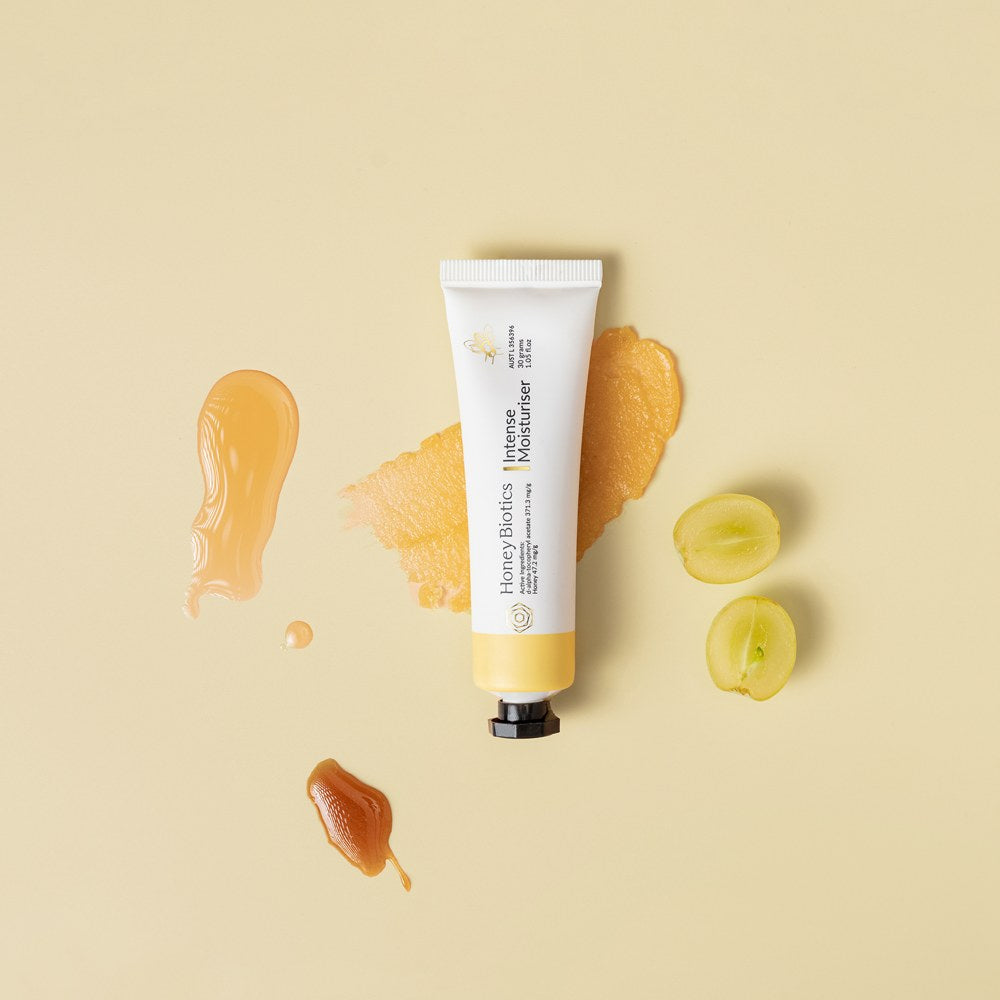
The one that did match is an Australian cream called the Honey Biotics Intense Moisturiser. It is not a cosmetic with a honey label. It is a TGA-listed medicine (AUST L 356396), which in Australia means its ingredients and claims have been assessed by the Therapeutic Goods Administration.
It pairs 6% UMF15+ Manuka Honey (MGO570+) with 37% natural Vitamin E and four supporting actives (jojoba, shea, grapefruit seed and beeswax). That is 43% active ingredients, all 100% natural actives, with no steroids and no harsh chemicals: no fragrance, no fillers. It is made in Australia, dermatologically tested, and gentle enough to use daily on the face, eyelids and body, the areas steroids restrict. A little goes a long way: a thin layer on clean skin, morning and night.
That is what makes it a genuinely natural alternative to steroid creams for adults with eczema-prone skin: it works on the flare from underneath, instead of only managing it from the top.
Steroid Cream vs. Active Manuka Cream
The three limits on a steroid label, side by side.
Topical steroid
Honey Biotics
Your skin over time
Can thin the skin with prolonged use
No steroid, no thinning warning. Supports the skin's own barrier repair
Delicate areas
Restricted on the face, eyelids and groin
Gentle enough for the face, eyelids and anywhere on the body
When you stop
Risk of a rebound flare (topical steroid withdrawal)
No steroid, so no withdrawal and no dependency
Never stop a prescribed steroid abruptly without talking to your doctor.
Save up to 33% when you buy more. 30-day calmer-skin guarantee.
Real Results
Skin That Finally Settled
Real photos shared by Honey Biotics customers, alongside their reviews. Eczema and dermatitis on the areas steroids usually restrict.
BeforeAfter
★★★★★
Dermatitis
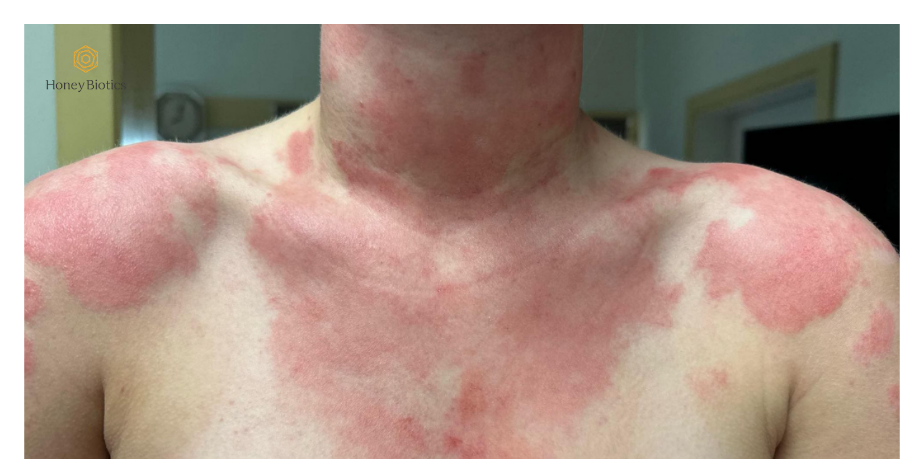
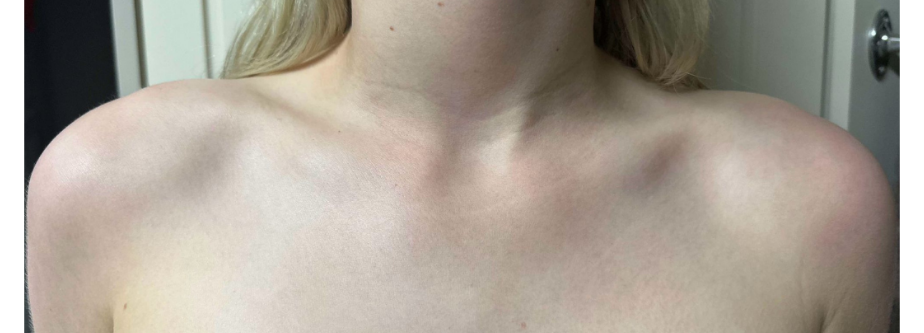
"My chest and neck were covered in angry red patches for months and nothing helped. A few weeks with this and it's completely calmed." Sarah M.
BeforeAfter
★★★★★
Eczema
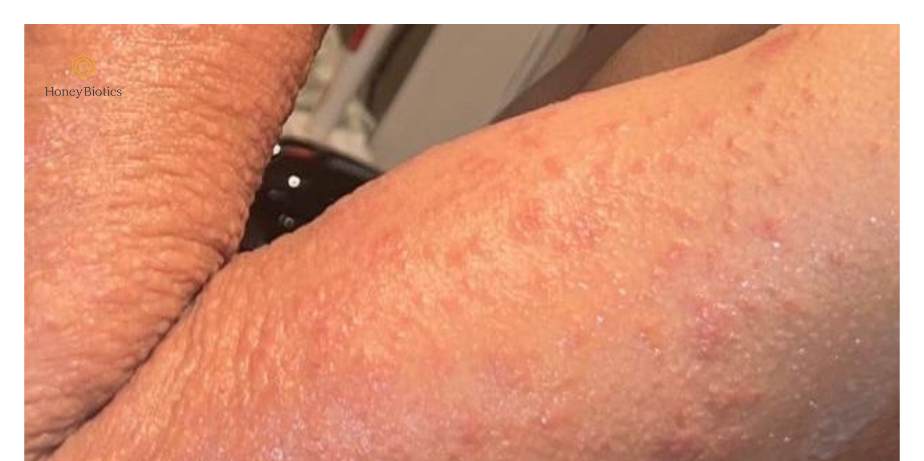
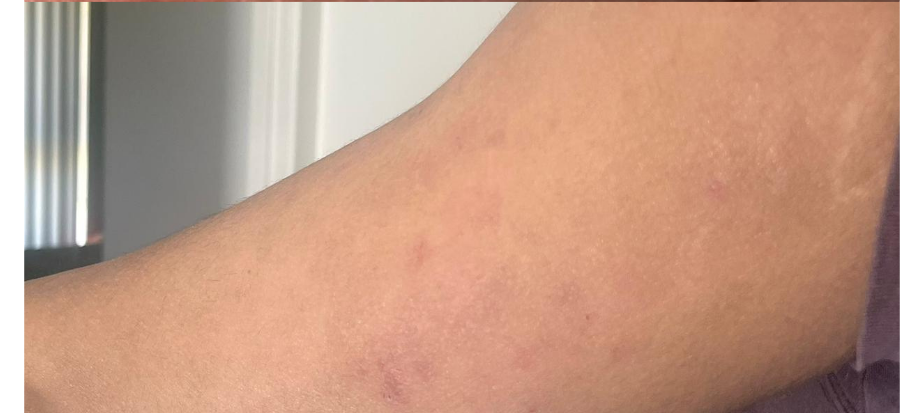
"After 8 months of red, itchy arms that nothing fixed, this cleared them in a few weeks." Denise W.
BeforeAfter
★★★★★
Eyelid dermatitis
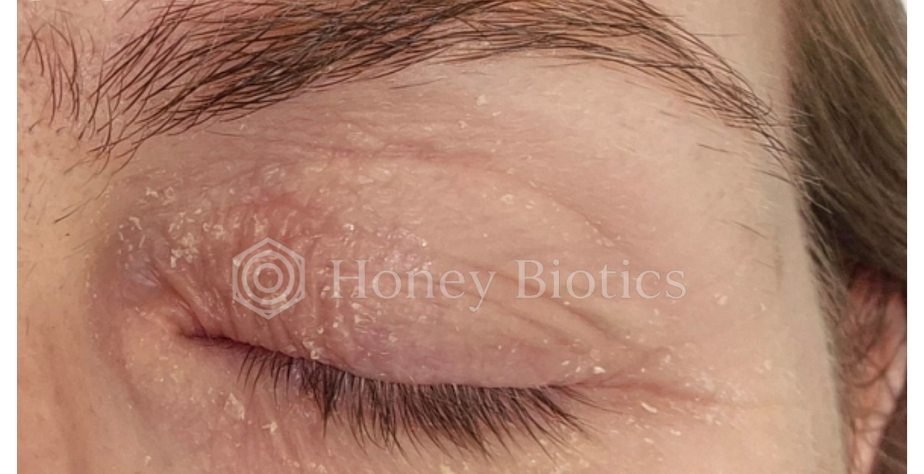
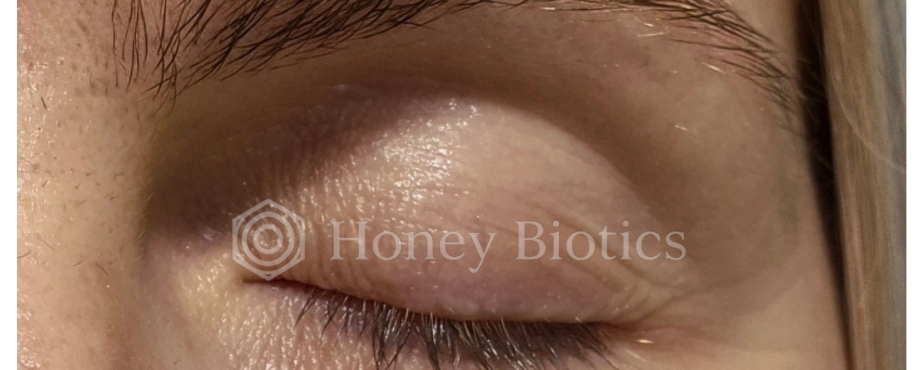
"Most creams stung too much to use up there. This one I can put right on the lids. No sting, and they've calmed right down." Sylvina
Individual results may vary. Photos and quotes shared by Honey Biotics customers.
What to Expect as Your Skin Settles
Rebalancing bacteria and rebuilding a barrier takes a few weeks. Here is the pattern most people describe.
Week 1 to 2
Often the first thing people notice is comfort. Less of the tight, raw feeling. The itch that used to wake you starts to ease. Underneath, the skin is beginning to rebalance.
Week 3 to 4
The redness starts to settle and flares become less frequent and less angry. Skin that felt reactive to everything starts to feel a little more like your own again.
Week 6 to 8
For many people this is when it clicks. Patches that had been there for months look calmer, the barrier feels stronger, and you stop bracing for the next flare.
Week 12 and beyond
Skin that is genuinely more resilient. Not "less bad." Comfortable, in a way you had maybe stopped expecting.
30-day calmer-skin guarantee · Save up to 33% on bundles.
Individual results may vary. Most people use it consistently for several weeks. Timelines depend on how long and how severe your skin has been.
The One Thing I Wish More People Knew Sooner
For years the advice on eczema was simple: moisturise more, avoid more, and reach for a steroid when it flares. That is all managing the problem from the outside.
“
Your skin already knows how to repair itself. It just needs the right conditions to do it.
Eczema tips the skin's bacteria out of balance and leaves the barrier broken. Most of what people reach for works on the surface and never reaches that. Active Manuka honey does.
What Happens Next
You have two paths. Keep managing the surface with moisturisers and steroids, and the flares tend to keep coming back. Or work on the layer underneath: rebalance the bacteria and rebuild the barrier with an active, TGA-listed Manuka cream you can use daily, on any area, without a warning label.
The research points one way, the mechanism makes sense, and the reviews line up with both.
As a TGA-listed medicine made in Australia to an active Manuka strength, Honey Biotics is produced in controlled batches. Availability can be limited when demand is high.
"The skin on my leg had been red, raw and broken out for months, and I'd honestly tried everything. A few weeks with this and the redness settled right down, and it finally looks like my own skin again."
Verified review
Karen L.Eczema
★★★★★
"The itchy rash on my arm had been there for weeks and nothing shifted it. A little of this and it calmed right down."
Verified review
LisaFacial dermatitis
★★★★★
"My cheeks and jaw were constantly flushed, red and irritated, and I'd become so self-conscious about it. A few weeks with this and the redness has really settled, and my skin feels comfortable again."
Verified review
SylvinaEyelid dermatitis
★★★★★
"The skin on my eyelids was red, dry and flaking, and most creams stung too much to use up there. This one I can put right on the lids. No sting, and they've calmed right down."
Mavric E, et al. (2008). Identification and quantification of methylglyoxal as the dominant antibacterial constituent of Manuka honeys. Molecular Nutrition & Food Research.
Kong HH, et al. (2012). Temporal shifts in the skin microbiome associated with disease flares and treatment in children with atopic dermatitis. Genome Research.
Molan PC. (2006). The evidence supporting the use of honey as a wound dressing. International Journal of Lower Extremity Wounds.
Johnston M, McBride M, et al. (2018). Antibacterial activity of Manuka honey and its components. AIMS Microbiology.
Hajar T, et al. (2015). A systematic review of topical corticosteroid withdrawal in patients with atopic dermatitis and other dermatoses. Journal of the American Academy of Dermatology.
Give Your Skin What It Has Been Missing
An active, TGA-listed Manuka cream you can use every day, on any area. Save up to 33% when you buy more, with a 30-day calmer-skin guarantee.
Free shipping on bundles · 30-day calmer-skin guarantee.
P.S. If you have been hiding flare-ups under long sleeves, bracing every time you change a product, or rationing a steroid you would rather not use on your face, this is the gentler way to work on the cause, not just the surface. Give it the full month. Hannah
A short, plain-language reference list. Full citations are below in the article too.
Bacteria drives the flare. Studies of the skin microbiome in atopic dermatitis show Staphylococcus aureus colonises eczema-prone skin far more than healthy skin, and that its dominance rises during flares. (Kong HH, et al. 2012, Genome Research.)
Manuka's antibacterial action comes from MGO. Methylglyoxal was identified as the dominant antibacterial constituent of Manuka honey, and it is what UMF/MGO grading measures. (Mavric E, et al. 2008, Molecular Nutrition & Food Research; Johnston M, et al. 2018, AIMS Microbiology.)
Honey supports skin repair. A review of the evidence for honey as a wound dressing describes its role in supporting a moist, protected environment for skin repair. (Molan PC. 2006, Int. J. Lower Extremity Wounds.)
Steroid limits are real. A systematic review documents topical corticosteroid withdrawal and the rebound that can follow prolonged use. (Hajar T, et al. 2015, J. Am. Acad. Dermatology.)