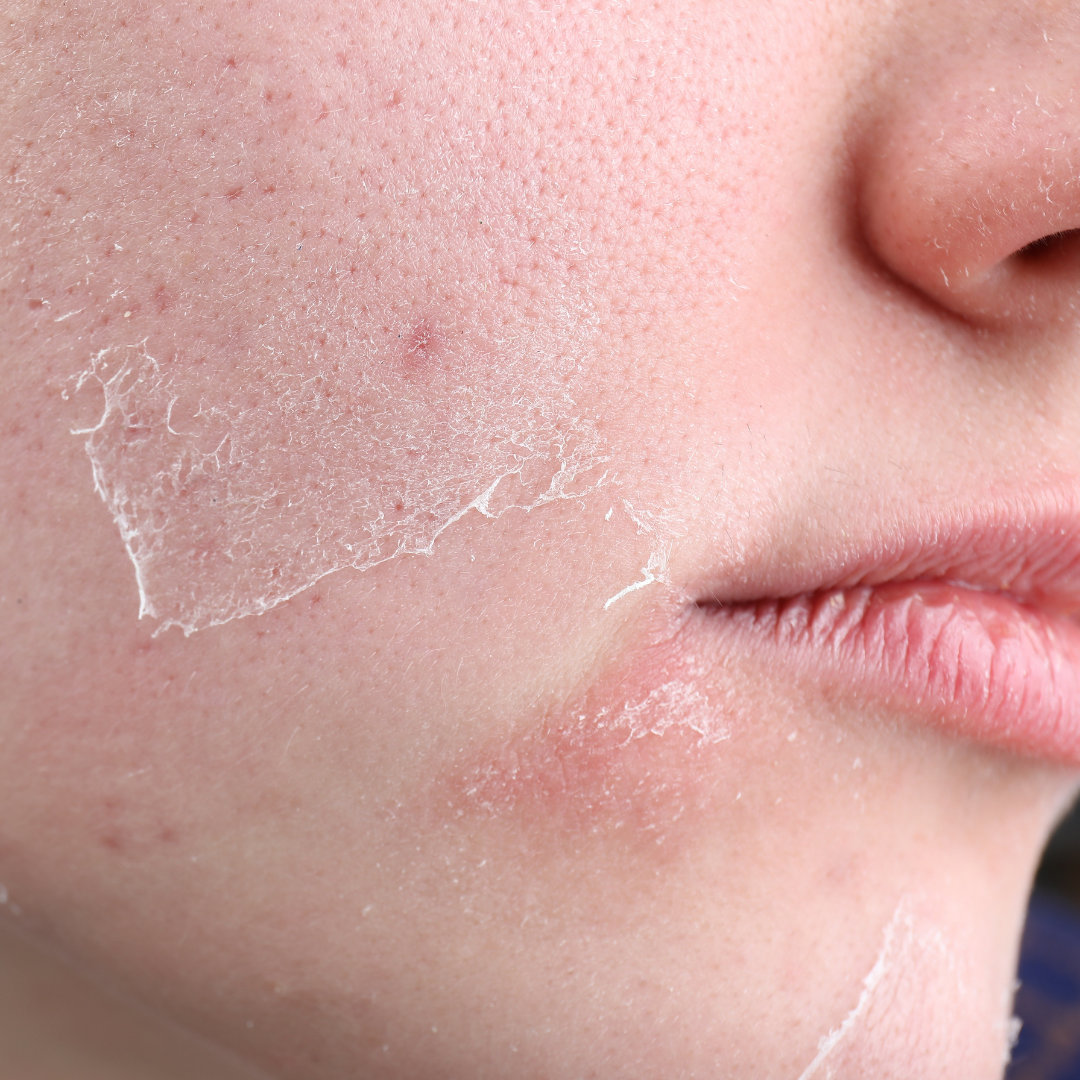
How to Soothe Flaky Skin on Your Face
Flaky skin on your face is almost always a sign of dryness or a disrupted skin barrier — often from harsh products, over-exfoliating, cold weather, or a skin condition. The way to soothe it is to simplify your routine, switch to gentle products, and moisturise consistently to restore the skin’s moisture.
What causes flaky skin on the face?
Facial flaking happens when the surface of the skin dries out and sheds. The usual triggers are:

- Dryness and dehydration — the most common reason, especially in cold or dry weather.
- Over-washing and hot water — both strip the oils that keep skin smooth.
- Harsh cleansers and over-exfoliation — scrubbing or using strong products too often damages the surface.
- Too many active ingredients — retinoids and acids can cause flaking if overused.
-
Skin conditions — dermatitis (including seborrheic and perioral dermatitis), eczema and psoriasis can all cause facial flaking.
How do you soothe flaky facial skin?
The goal is to stop stripping the skin and start replacing what it’s lost:
- Pause exfoliants and strong actives for a week or two and let your skin settle.
- Switch to a gentle cleanser and lukewarm water, and pat your face dry.
- Moisturise on slightly damp skin to help lock in hydration, morning and night.
- Don’t pick or peel the flakes — it irritates the skin and slows healing.
- Use sunscreen during the day to protect the recovering surface.
- Add moisture to the air with a humidifier, and be patient — give a gentle routine time to work.
Where Honey Biotics Intense Moisturiser fits in
A gentle, hydrating moisturiser is the cornerstone of calming flaky skin. Our Intense Moisturiser is a TGA-listed medicine made in Australia with MGO 570+ Manuka honey, formulated to soothe and hydrate dry, flaky and dermatitis-prone skin. Because it’s steroid-free, it’s suitable for daily use, morning and night. Patch test first, avoid the eye area, and stop use if irritation occurs. If your skin also feels tight and reactive, it may be a barrier issue worth addressing alongside the flaking.
When should you see a doctor?
See your GP or a dermatologist if the flaking is persistent or worsening, comes with redness, itching, scaling or a defined rash (which can point to dermatitis or psoriasis), or doesn’t improve after a couple of weeks of gentle care. A professional can identify the cause and tailor treatment to your skin.
Frequently asked questions
Why is my face flaking even though I moisturise?
Usually because something else is stripping the skin faster than the moisturiser can help — often over-cleansing, hot water, or too many actives. Simplifying your routine alongside moisturising tends to fix it.
Should I exfoliate flaky skin off my face?
No — scrubbing flaky skin usually makes it worse. Pause exfoliation, moisturise consistently, and let the skin recover gently.
What helps flaky skin on the face overnight?
Apply a rich moisturiser to clean, slightly damp skin before bed. Consistent overnight hydration helps the surface repair while you sleep.
Can flaky skin be a sign of a skin condition?
Yes. Persistent flaking with redness or scaling can be a sign of dermatitis, eczema or psoriasis, so it’s worth seeing a doctor if gentle care isn’t enough.
Is it dry skin or dehydrated skin?
Dry skin lacks oil and tends to flake all over; dehydrated skin lacks water and can feel tight even when oily. Either way, gentle care and a good moisturiser help.
This article is general information, not medical advice. Speak to your doctor about your individual situation.